AI · AIDP
Inside the Oracle AI Data Platform Summit London: Building the Agentic Enterprise Stack
IntroductionI attended the Oracle AI Data Platform Summit in London the day after attending the Oracle AI World London 2026. While AI World provided the broader direction for Oracle’s agentic AI push across…
Introduction
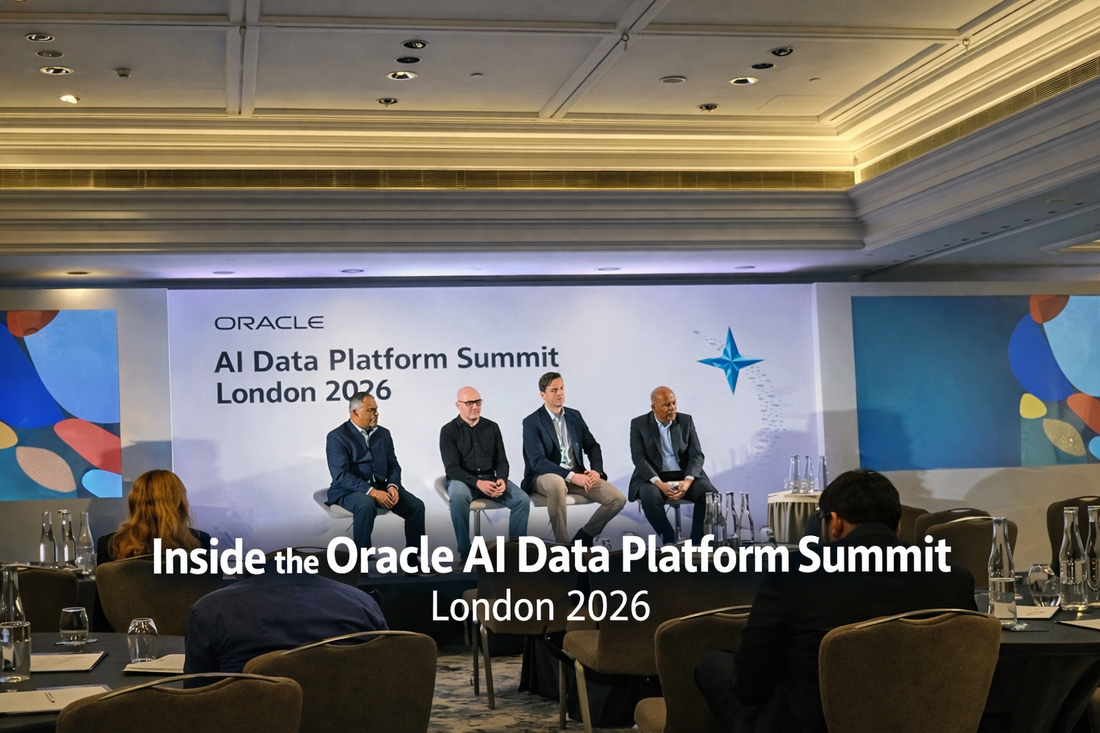
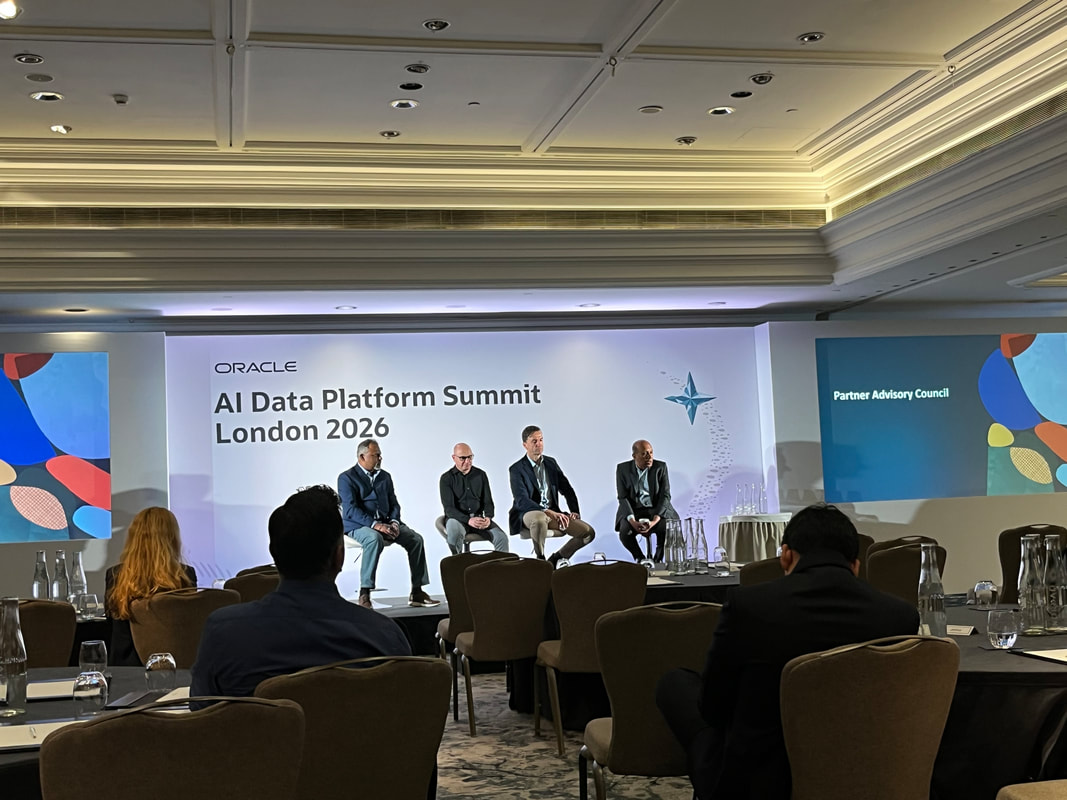
I attended the Oracle AI Data Platform Summit in London the day after attending the Oracle AI World London 2026. While AI World provided the broader direction for Oracle’s agentic AI push across applications, infrastructure, database and analytics, the AIDP Summit offered an opportunity to hear directly from the product team and go much deeper into the platform thinking behind that message.
That made the summit particularly valuable. The previous day’s keynotes established the scale of Oracle’s AI ambitions, but the AIDP Summit began to explain how Oracle is thinking about the data, tooling, governance and runtime architecture required to support enterprise AI in practice.
In a recent blog post, I wrote about Oracle AI World London 2026 and the way Oracle’s messaging had clearly shifted from assistants and copilots towards more agentic workflows. At the summit, that same message continued, but with much more detail on the underlying platform components.
From Broad AI Messaging to Platform Detail
One of the most interesting aspects of the summit was how clearly it connected back to the themes from AI World.
At AI World, Oracle’s messaging framed OCI as the enterprise AI platform across models, agents and governance. Fusion Agentic Applications, Agent Studio and the broader move towards orchestrated AI workflows all pointed to a strategy that is now much bigger than standalone assistants.
At the AIDP Summit, that story was extended into the platform architecture needed to make enterprise AI operational.
AIDP was positioned not simply as a set of data services, but as an enterprise-ready data and AI foundation supporting:
- AI-powered development tools
- agentic business user experiences
- governed access to data and models
- orchestration of agents and tools
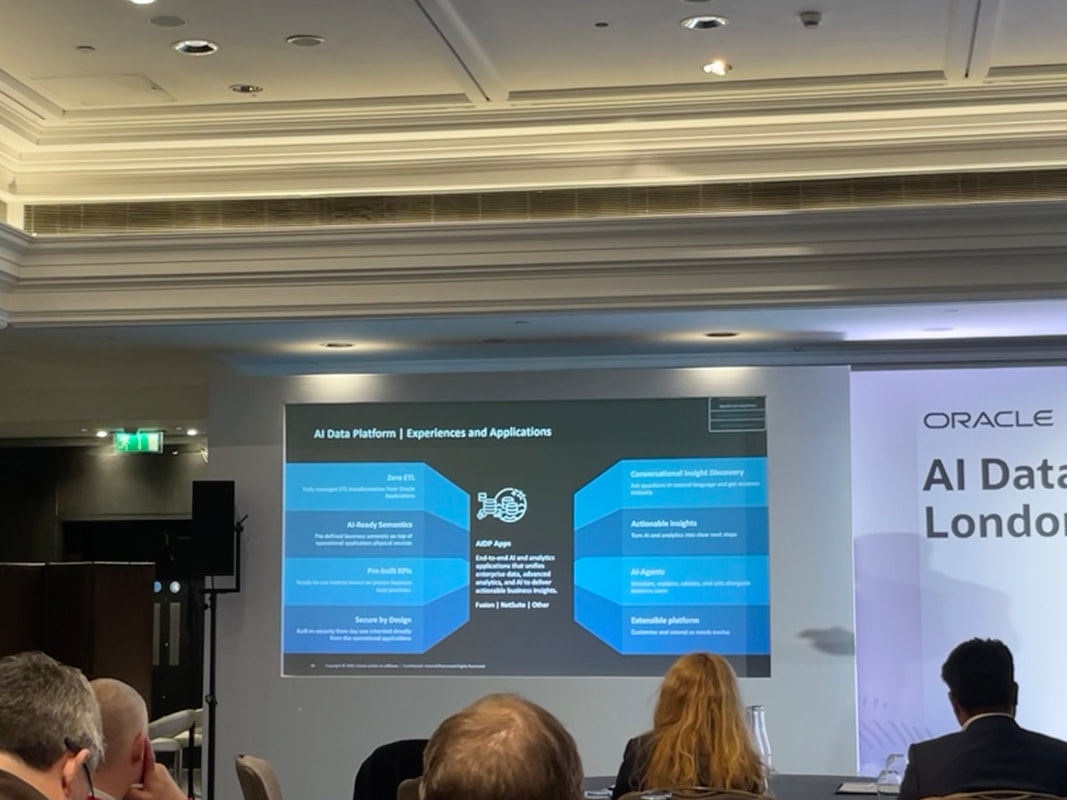
That framing is important because it reinforces the idea that enterprise AI is not just about access to models. It requires a platform foundation that can support the full lifecycle of building, exposing, governing and monitoring AI-driven experiences.
The Emerging Agent Architecture in AIDP
A particularly strong part of the summit was the way Oracle described the emerging agent architecture within AIDP.
Several components stood out.
Agent Studio
Agent Studio was presented as a new AIDP capability for building agents. What stood out here was the combination of a low-code visual experience with support for more code-first and pro-code approaches.
This is important because it suggests Oracle is aiming to support both business-oriented builder experiences and more technical developer workflows.
The ability to test and refine agents, monitor response quality and efficiency, and review detailed performance at the level of individual agents and tools also suggests a much more operational view of enterprise AI development than simple prompt experimentation.
Agent Registry
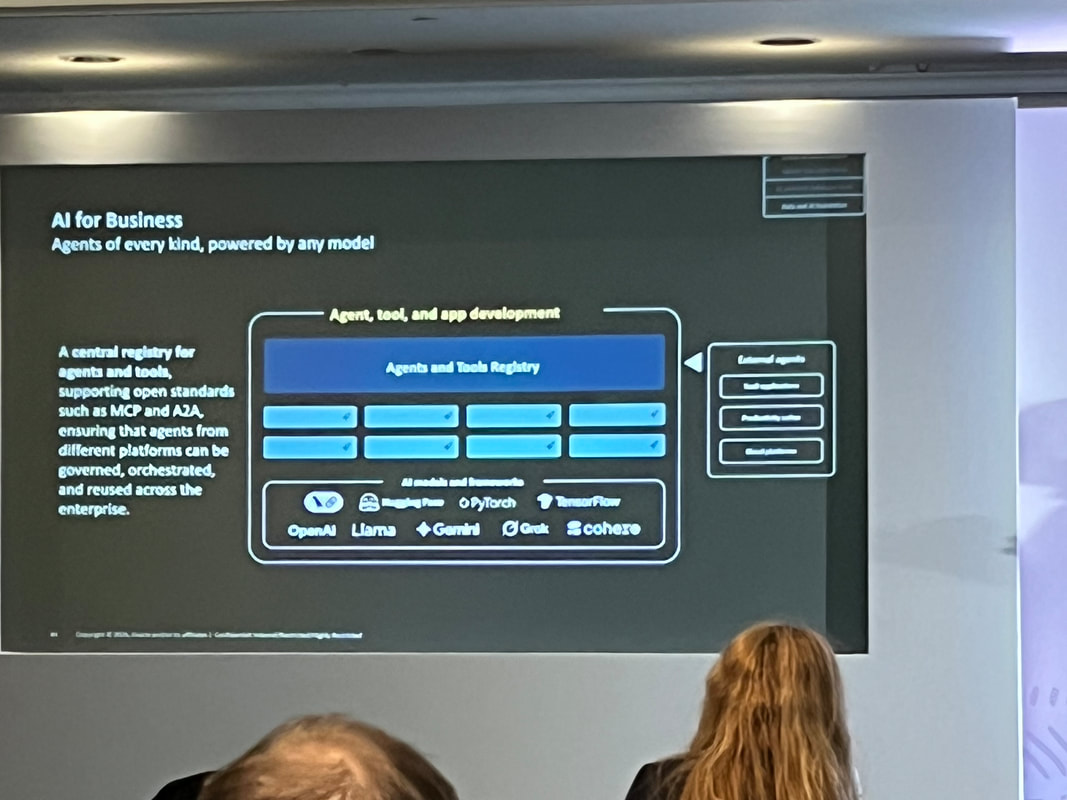
The Agent Registry was another significant part of the story. Oracle explained that as long as agents support the A2A protocol , they can be registered.
That is a notable architectural point because it opens the door to a broader ecosystem in which not all agents need to originate from the same platform. Instead, the registry becomes a governed directory of internal and external agent capabilities.
Agent Hub
Agent Hub was positioned as the consumer entry point, enabling discovery of agents, interaction and task orchestration. It works with the agent catalog when an agentic request is made in the hub, and Oracle also discussed the idea of agents calling other agents through A2A interactions.
Taken together, Agent Studio, Agent Registry and Agent Hub suggest a coherent pattern:
- build agents
- register agents and tools
- expose them to users
- orchestrate interactions across them
This begins to look much more like an enterprise agent platform than a standalone assistant feature.
Governance, Guardrails and Observability
Another strong theme throughout the summit was that Oracle is treating governance and observability as first-class capabilities.
That came through in several areas:
- out-of-the-box blocking of toxic and malicious content
- agent guardrails
- monitoring of deployed agents
- latency monitoring at thread level
- token consumption visibility
- cost estimation and optimisation for generative AI usage
This matters because it reflects a more realistic enterprise view of AI adoption.
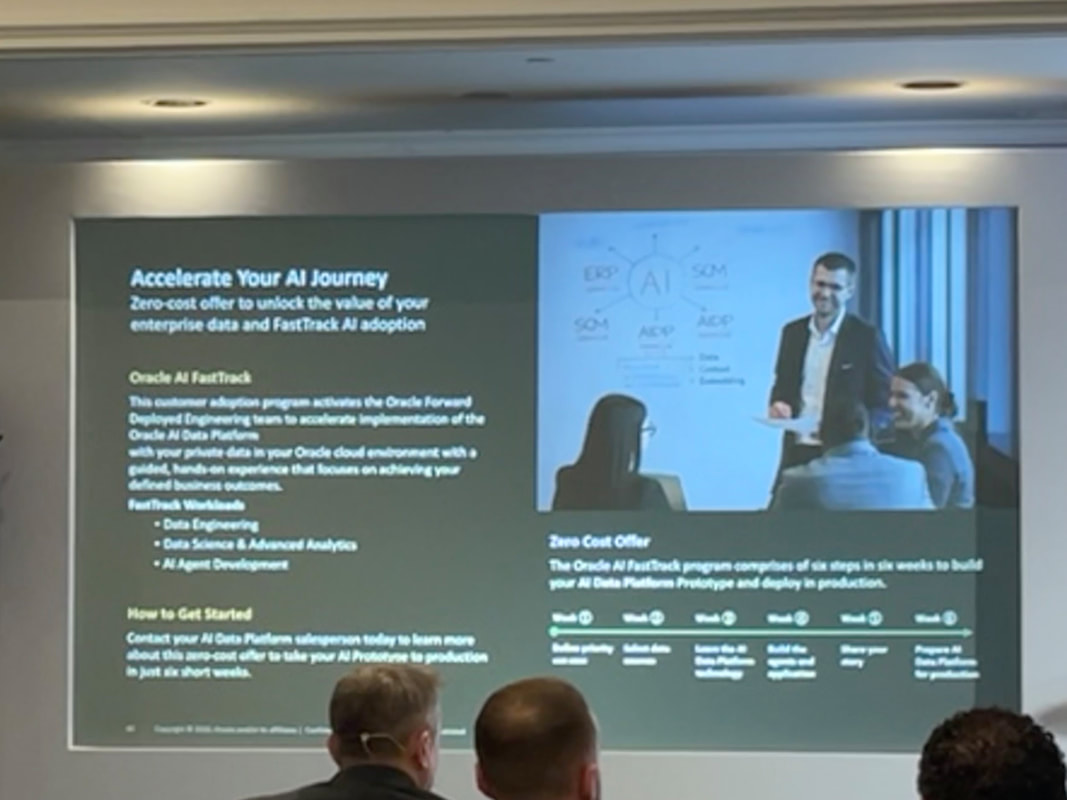
For many organisations, the challenge is no longer just whether they can build an AI agent. The bigger question is whether they can operate one responsibly, observe its behaviour, understand its cost profile and keep it aligned with governance requirements.
The summit sessions suggested that Oracle understands this well. The emphasis was not just on building agents, but on running them in a governed and observable way.
Flexibility in Models and Developer Tooling
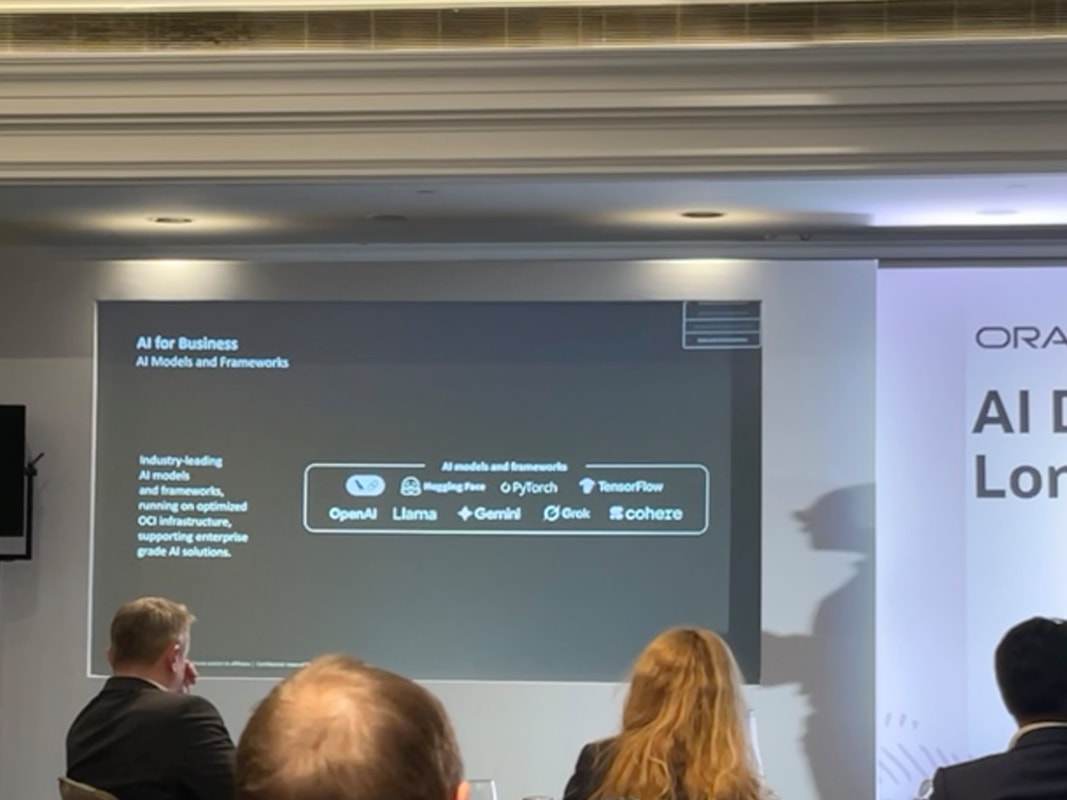
Another interesting message was the platform’s support for a wide variety of foundational LLMs, with the flexibility to change models over time.
This flexibility was positioned not only as a technical advantage, but also as something that matters for regional compliance and changing enterprise requirements.
That is an important point because model choice is increasingly tied to policy, data residency, cost, performance and risk considerations.
On the development side, Oracle also discussed AI code assist in notebooks and noted that AIDP plugins for VS Code are in the pipeline.
This points to a broader trend within AIDP towards improving developer productivity as part of the platform experience, rather than treating notebooks and data tooling as isolated utilities.
FAIDP and the Changing Nature of Analytics Experiences
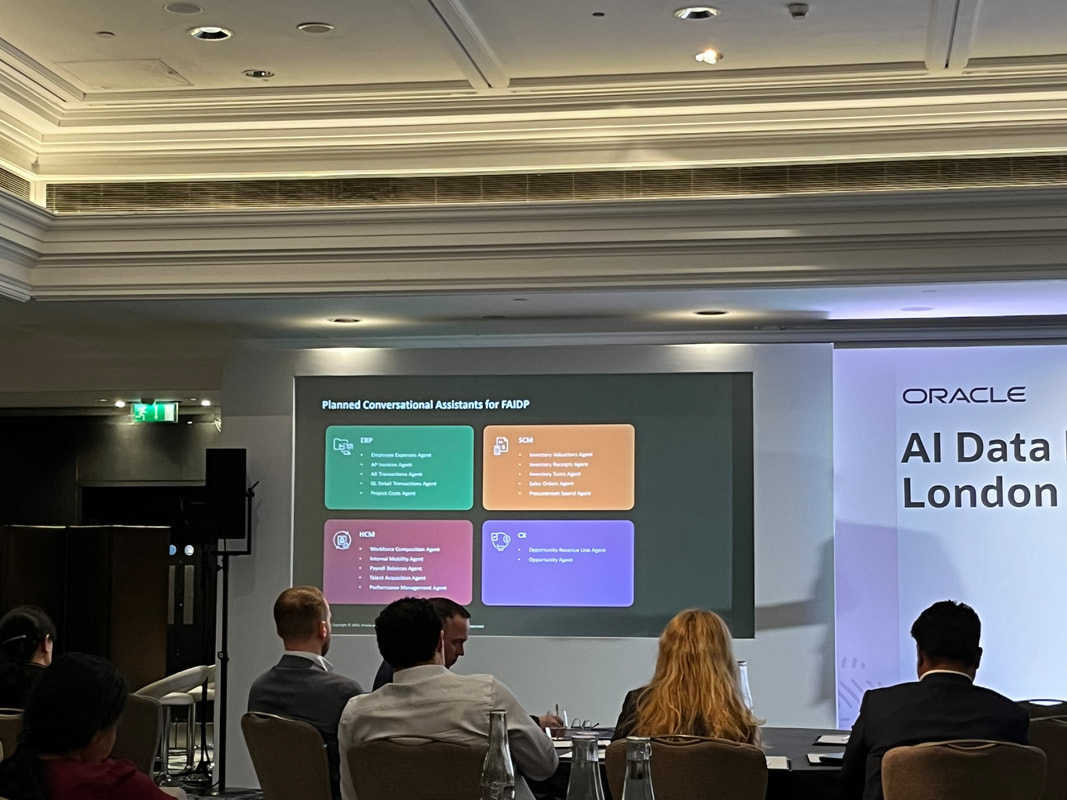
The summit also touched on FAIDP and the changing role of AI in insight discovery.
One of the clearest themes here was the shift away from traditional patterns in which IT teams built pre-defined dashboards for business users to consume. The message instead was that AI is changing insight discovery into a more conversational and interactive experience.
What was especially interesting was the suggestion that this evolution no longer stops at insights. It now increasingly moves towards:
- recommendations
- scenario simulation
- actions alongside business users
That is a meaningful shift.
The implication is that analytics is moving from being a system of static outputs towards becoming an interactive layer that can explain, recommend and potentially act.
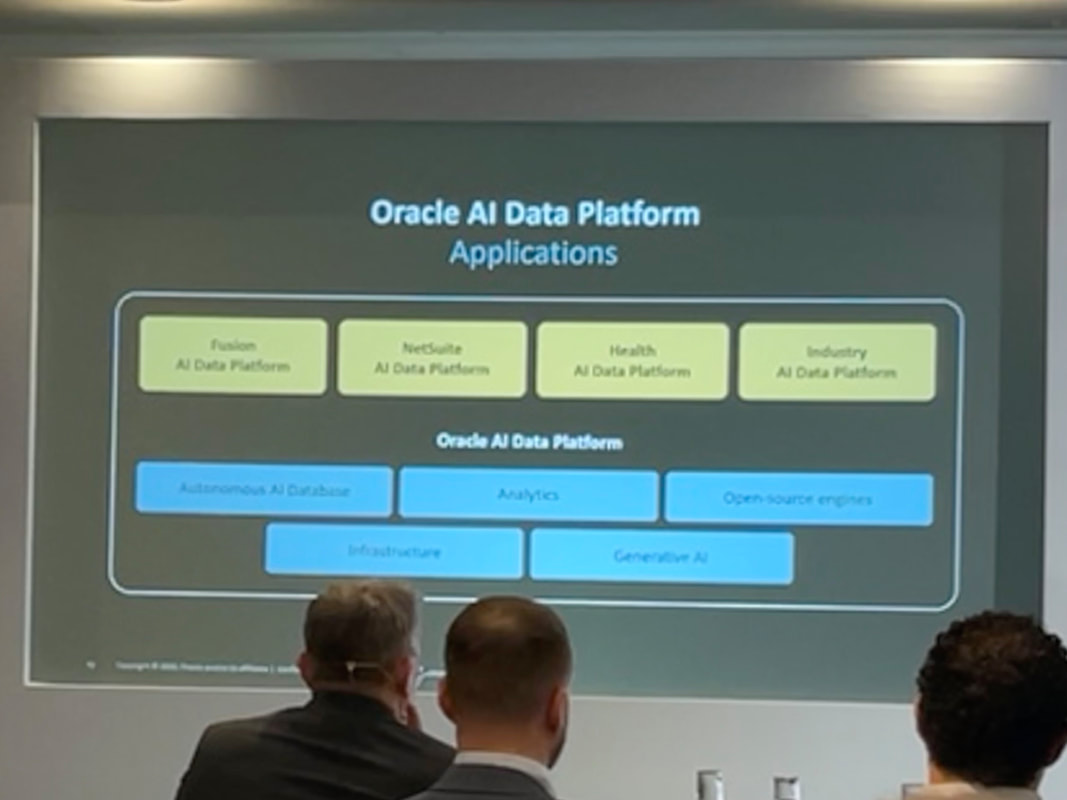
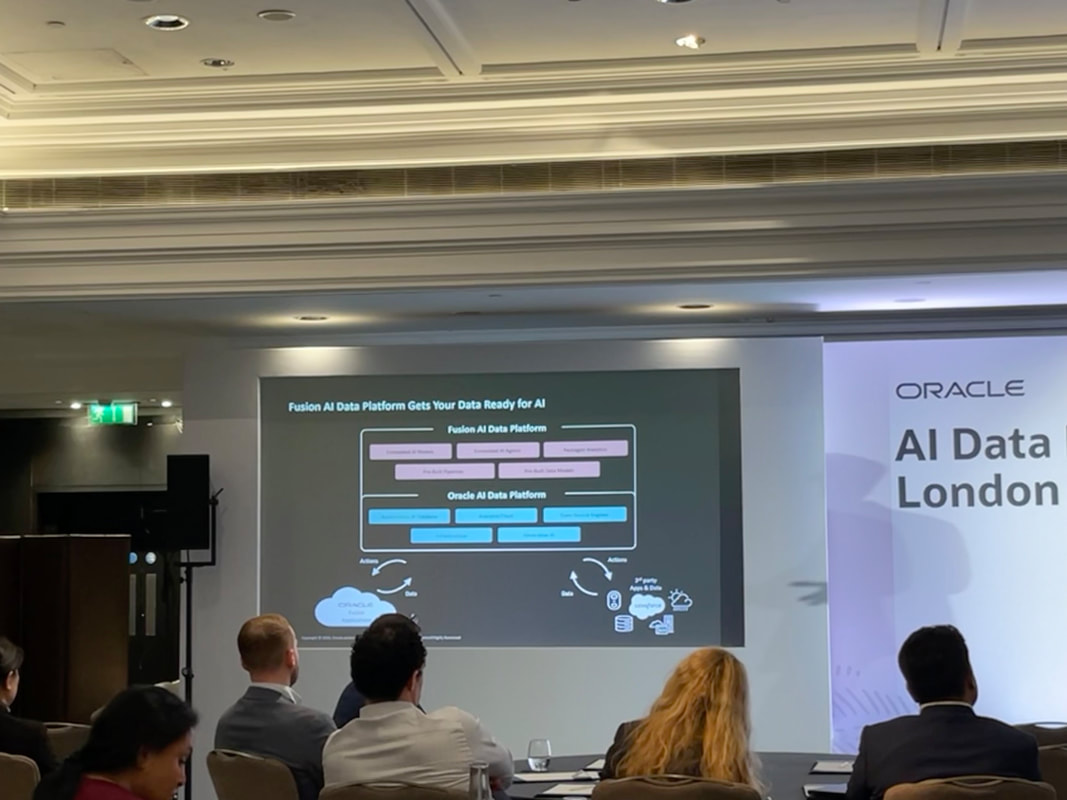
There was also an important positioning point around FAIDP as a SaaS version of AIDP, with no migration required to move from FDI to FAIDP. For organisations already invested in Fusion Analytics, that is likely to be a very significant message.
My Main Takeaway
What stood out to me most at the summit was that Oracle’s AIDP story is no longer just about assembling data services.
It is increasingly about providing the governed platform foundation for building, registering, exposing, orchestrating and monitoring enterprise AI agents.
That feels like an important shift.
AI World London set the strategic direction. The AIDP Summit then provided a much more detailed view of how Oracle is attempting to turn that strategy into an enterprise platform model.
For me, that was the value of attending both events. The combination made it much easier to connect the high-level messaging from the keynotes with the more practical architecture and product direction being discussed by the product team. There were also a number of open question sessions with a wide range of areas covered ranging from the future state of analytics with the emergence of agentic AI to Partner Enablement and Product pricing to name a few that were all answered candidly .
Conclusion
Oracle AI World London made it clear that Oracle is pushing strongly into agentic AI across applications, infrastructure and analytics.
The Oracle AI Data Platform Summit then added another layer of depth, showing how Oracle is thinking about the platform capabilities needed to support that vision in practice.
From Agent Studio, Agent Registry and Agent Hub, through to guardrails, observability, developer tooling and the evolution of analytics experiences, the summit painted a picture of AIDP as more than just a data platform. It is increasingly being positioned as the foundation for the next generation of governed enterprise AI.