AI
The Architecture Beneath Enterprise AI
IntroductionEnterprise AI is one of the most widely used terms in technology today, but it is also one of the most loosely defined.In many discussions, enterprise AI is reduced to a model, a chatbot or an assistant…
Introduction
Enterprise AI is one of the most widely used terms in technology today, but it is also one of the most loosely defined.
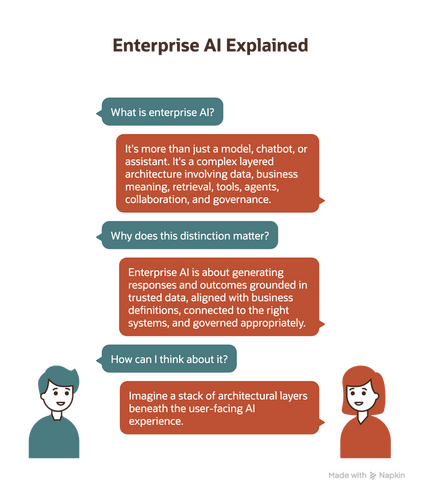
In many discussions, enterprise AI is reduced to a model, a chatbot or an assistant connected to company data. In practice, the reality is far more complex. Reliable enterprise AI depends on a layered architecture that brings together data, business meaning, retrieval, tools, agents, collaboration and governance.
That distinction matters because enterprise AI is not simply about generating responses. It is about generating responses and outcomes that are grounded in trusted data, aligned with business definitions, connected to the right systems and governed appropriately.
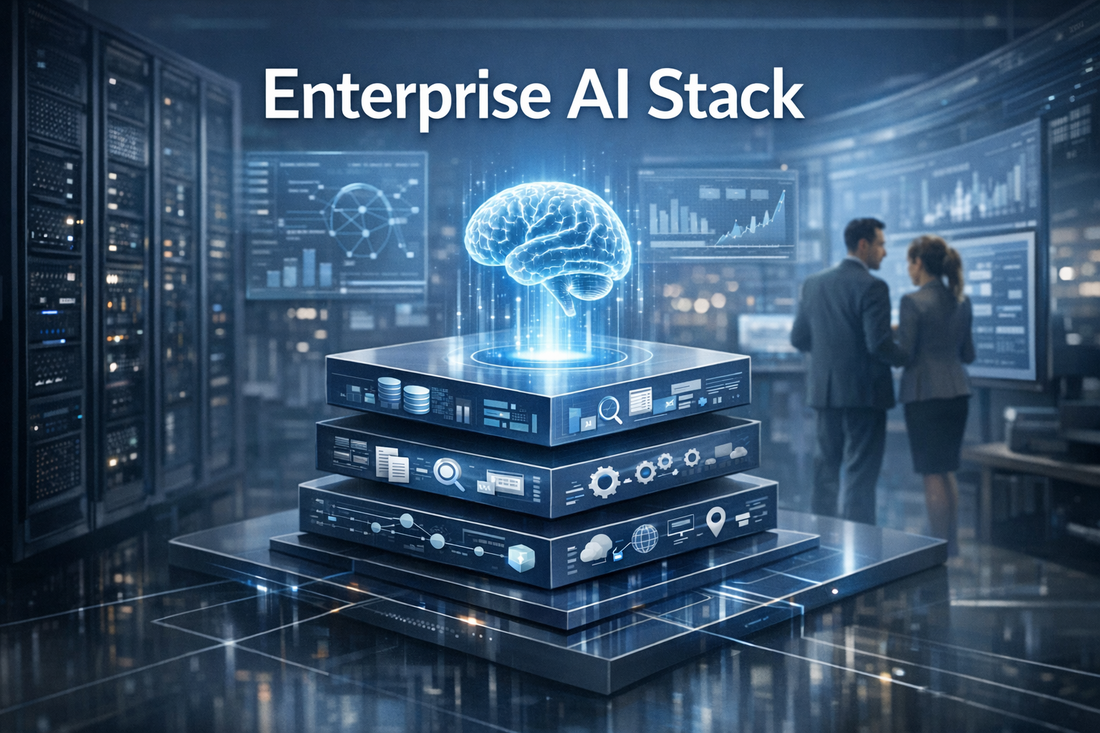
A useful way to think about this is as a stack of architectural layers sitting beneath the user-facing AI experience.
Enterprise Data Sources
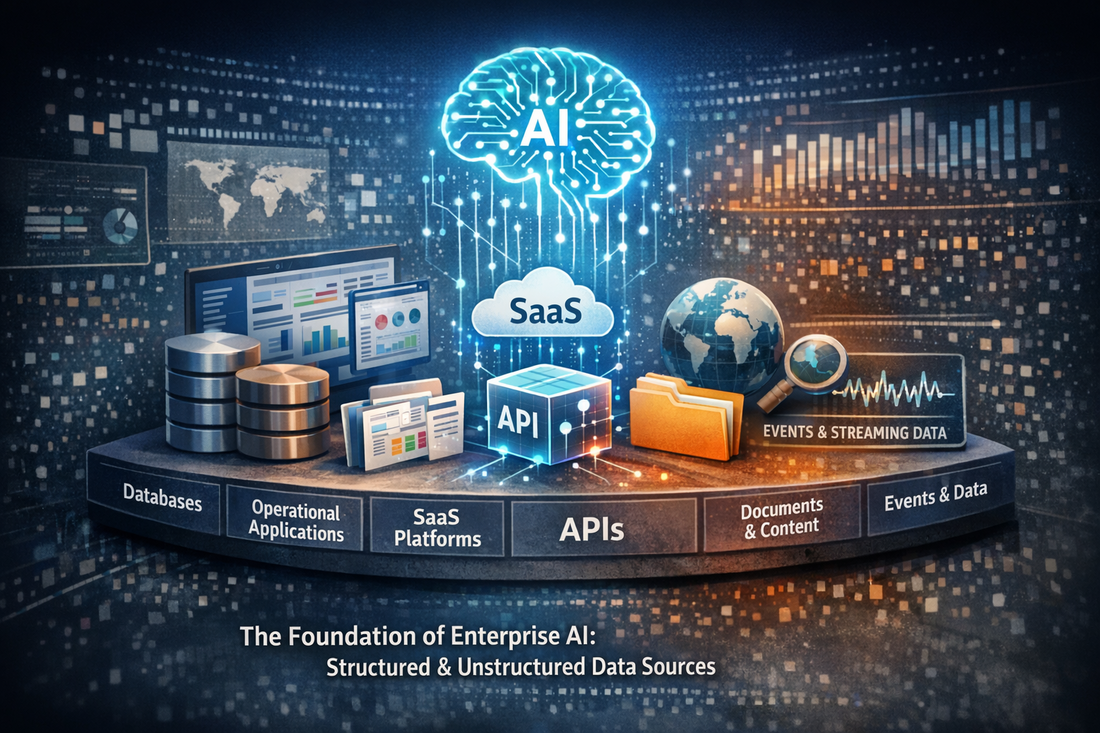
At the base of the stack sit the enterprise data sources. These include:
- databases
- operational applications
- SaaS platforms
- APIs
- documents and content repositories
- events and streaming data
- external data sources
This is the raw material of enterprise AI. It includes both structured and unstructured data and is often fragmented across multiple systems, business domains and platforms.
Without access to this landscape, enterprise AI has no business context to work with.
Semantic Layer and Ontologies
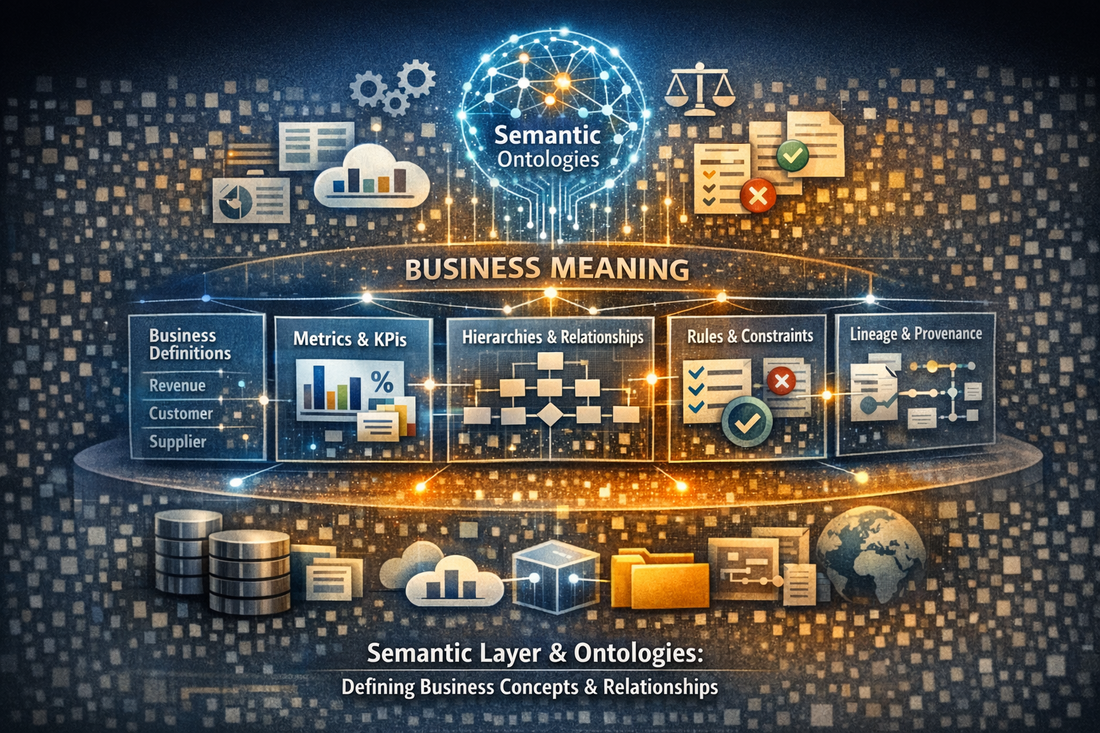
Above the data sources sits the semantic layer and, in some cases, broader ontologies.
This layer provides the shared business meaning that allows enterprise data to be interpreted consistently.
It can include:
- business definitions
- metrics and calculations
- hierarchies and relationships
- rules and constraints
- lineage and provenance
This layer is critical because data on its own does not explain what it means. Enterprise AI needs more than access to records and documents. It needs to understand how the business defines concepts such as revenue, margin, customer value, supplier performance or attrition risk.
Without this semantic grounding, enterprise AI risks generating answers that may sound plausible but are not aligned with the organisation’s own definitions.
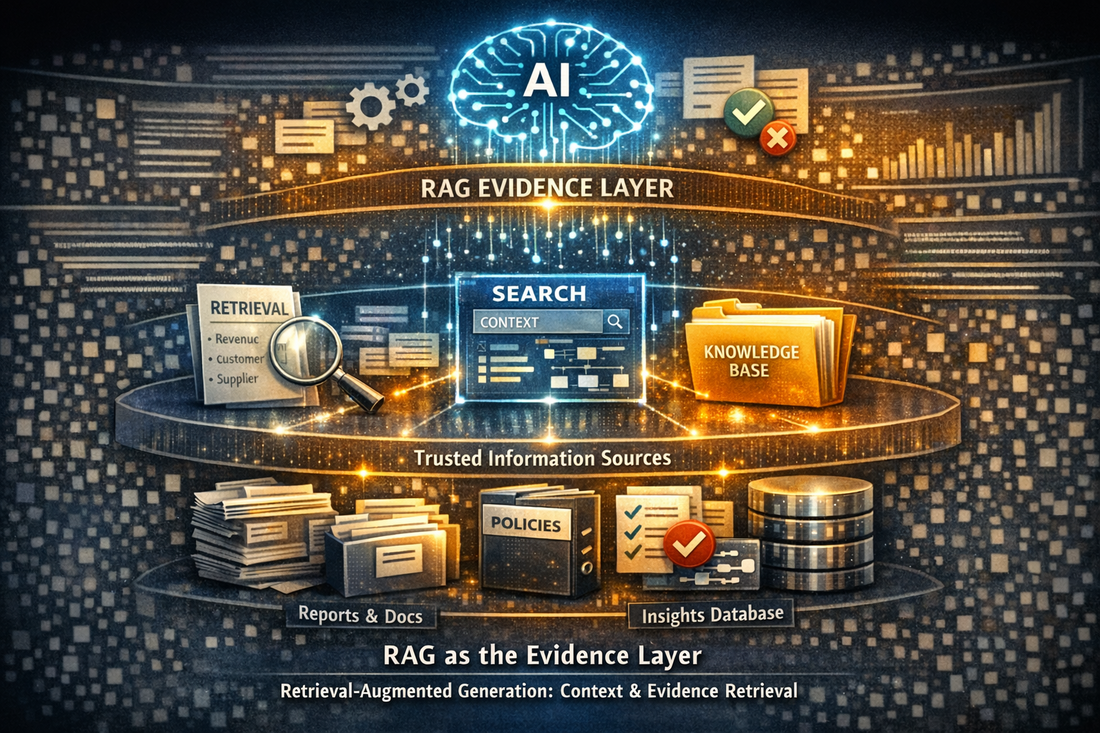
RAG as the Evidence Layer
Retrieval-augmented generation, or RAG, adds another important layer.
If semantics provide the meaning, RAG provides the evidence.
RAG allows AI systems to retrieve relevant context at runtime from trusted enterprise sources. This may include documents, policies, reports, knowledge bases or other forms of business content.
The role of RAG is not to replace semantics. It is to complement it by ensuring that AI agents and assistants can draw on the most relevant supporting information when generating responses.
In practice, this means RAG helps ground responses in enterprise knowledge and reduces the risk of answers being produced without supporting context.
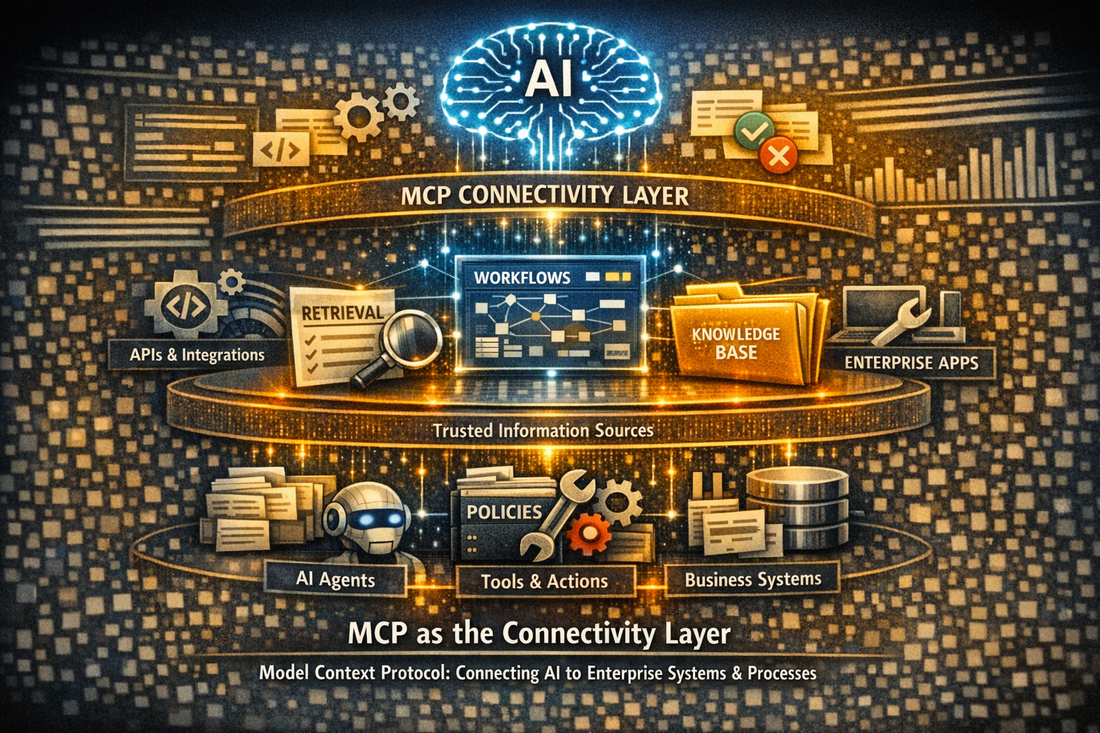
MCP as the Connectivity Layer
Another increasingly important layer is MCP, or Model Context Protocol.
If semantics provide meaning and RAG provides evidence, MCP provides connectivity.
MCP connects models and agents to tools, systems and actions. It allows AI-driven experiences to move beyond simply answering questions and into interacting with enterprise systems, invoking tools and participating in workflows.
This is an important distinction because enterprise AI is not just about information access. It is increasingly about enabling AI systems to work with enterprise applications, APIs, analytical tools and operational processes.
Without this connectivity layer, AI remains largely conversational. With it, AI begins to participate in the broader enterprise operating model.
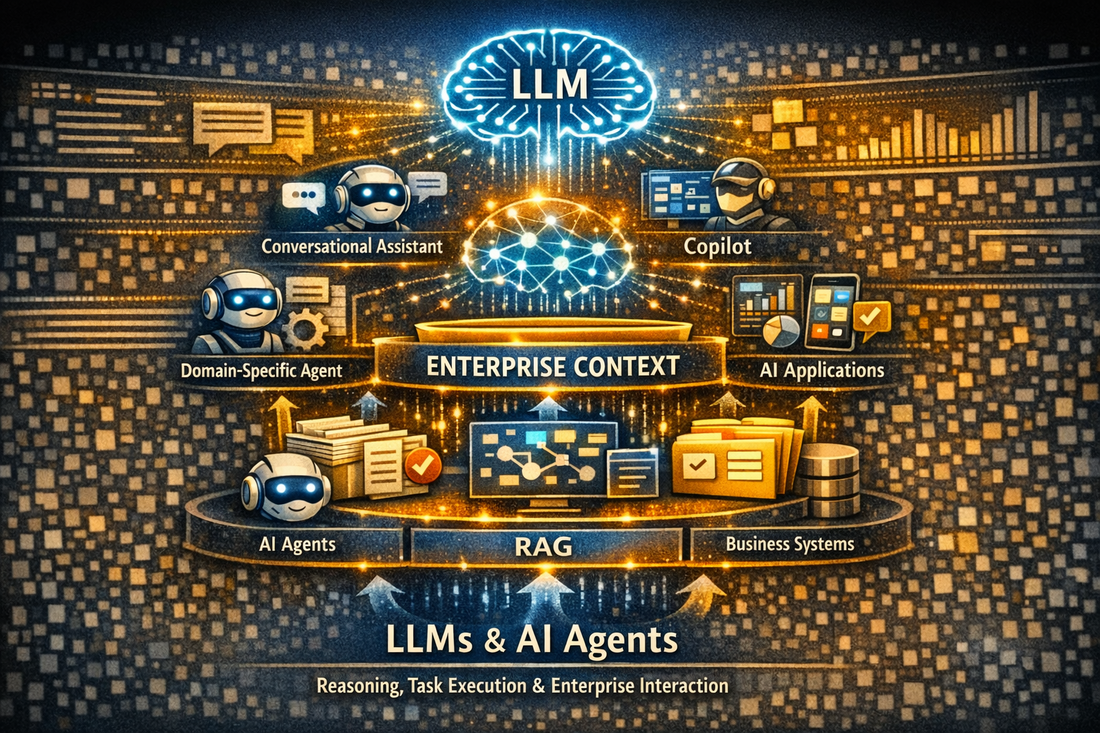
LLMs and AI Agents
Above these layers sit the LLMs and AI agents that most people associate most directly with AI.
This layer includes:
- conversational assistants
- copilots
- domain-specific agents
- AI applications
The LLM provides the reasoning capability. The agents provide task orientation, domain-specific behaviour, orchestration and interaction patterns.
This is the layer that reasons over enterprise context, uses tools and generates outcomes.
However, this layer is only as effective as the layers beneath it. Without enterprise data, semantics, retrieval and connectivity, LLMs and agents have far less ability to operate reliably in enterprise settings.
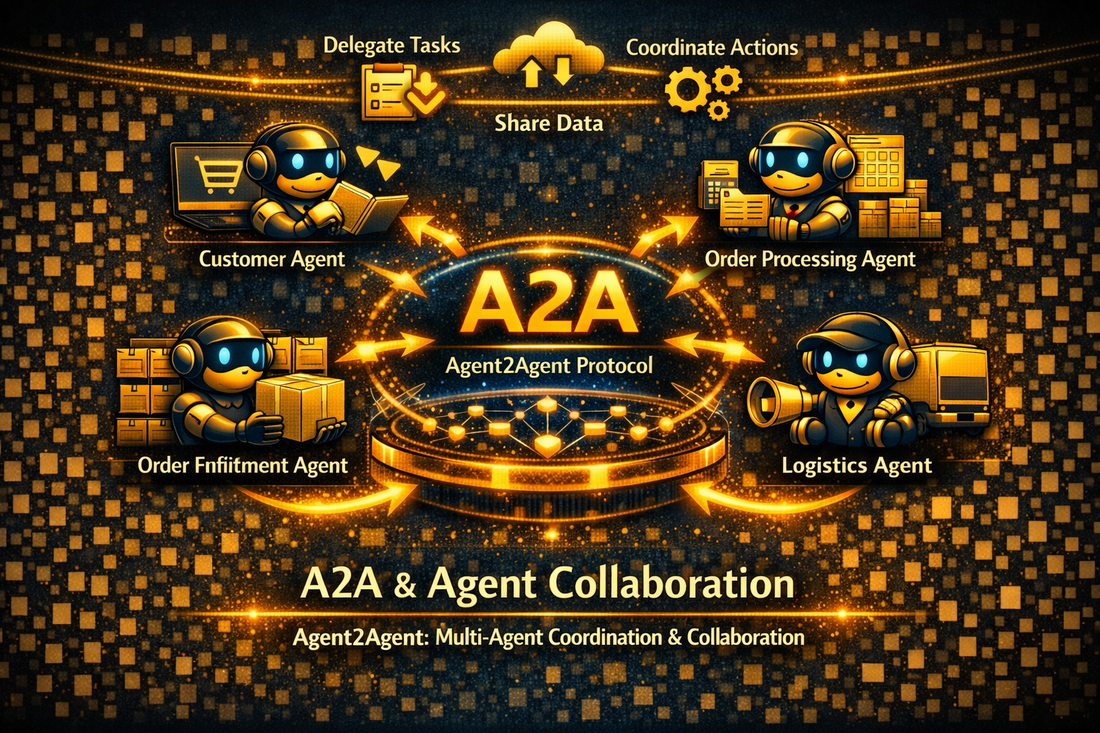
A2A and Agent Collaboration
As enterprise AI evolves, it is increasingly clear that a single agent is often not enough.
This is where agent-to-agent collaboration becomes important. A2A, or Agent2Agent, is a Google-backed open protocol designed to allow specialised agents to communicate, coordinate and delegate tasks across systems.
A2A enables specialised agents to communicate, delegate tasks and coordinate with one another. Instead of relying on one general-purpose assistant to handle everything, enterprises can begin to orchestrate multiple specialised agents working together.
That creates new possibilities for:
- delegation across agents
- coordination of multi-step tasks
- domain-specific specialisation
- more scalable agentic architectures
This moves enterprise AI beyond isolated assistants towards a more collaborative agent ecosystem.
Governance and Trust
Running across the entire stack is governance and trust.
This is not a separate add-on. It is a cross-cutting requirement that applies to every layer.
This includes:
- policies and guardrails
- lineage and provenance
- security and privacy
- compliance and audit
- monitoring and observability
This is what turns AI into enterprise AI.
The enterprise requirement is not just to make AI useful. It is to make AI trustworthy, observable, compliant and aligned with organisational policy.
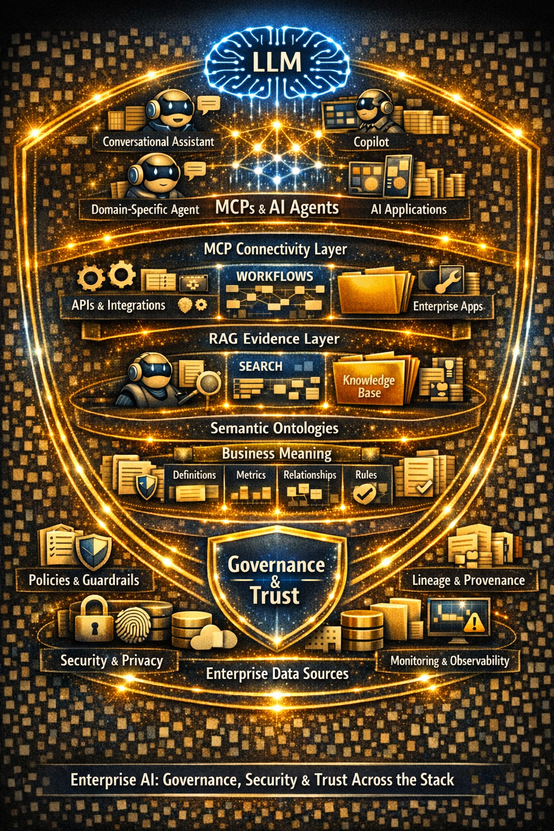
Bringing the Layers Together
When viewed as a whole, enterprise AI begins to look much less like a single technology and much more like an architecture.
- Enterprise data provides the source material.
- Semantics provide the meaning.
- RAG provides the evidence.
- MCP provides the connectivity.
- LLMs provide the reasoning.
- A2A provides the collaboration.
- Governance provides the trust.
That combination is what allows enterprise AI to move from generic model interaction towards grounded, connected and actionable outcomes.
Conclusion
Enterprise AI is far more than an LLM connected to company data.
It is a layered architecture that can combine enterprise data, semantics, retrieval, connectivity, agents, collaboration and governance.
Not every enterprise AI implementation will require every layer in the same way. Some use cases may not need RAG, MCP or agent-to-agent collaboration at all. However, certain foundations are far harder to compromise on. Trusted enterprise data, clear business meaning and appropriate governance are often non-negotiable if AI is to operate reliably in an enterprise setting.
Understanding that architecture matters because it helps explain why enterprise AI is not just a model problem. It is a data, meaning, systems and governance problem as well.
As organisations move beyond experimentation and towards operational AI, it is these underlying architectural layers, and the choices they make about which are essential for each use case, that will determine whether enterprise AI remains superficial or becomes truly useful, trusted and effective.