AI · AIDP
Oracle AI Data Platform as the Bridge Between Enterprise Data and AI Analytics
IntroductionIn a recent article, I explored why semantic models remain foundational in the age of AI-driven analytics. As conversational interfaces and AI agents become more common in analytics platforms, the need for…
Introduction
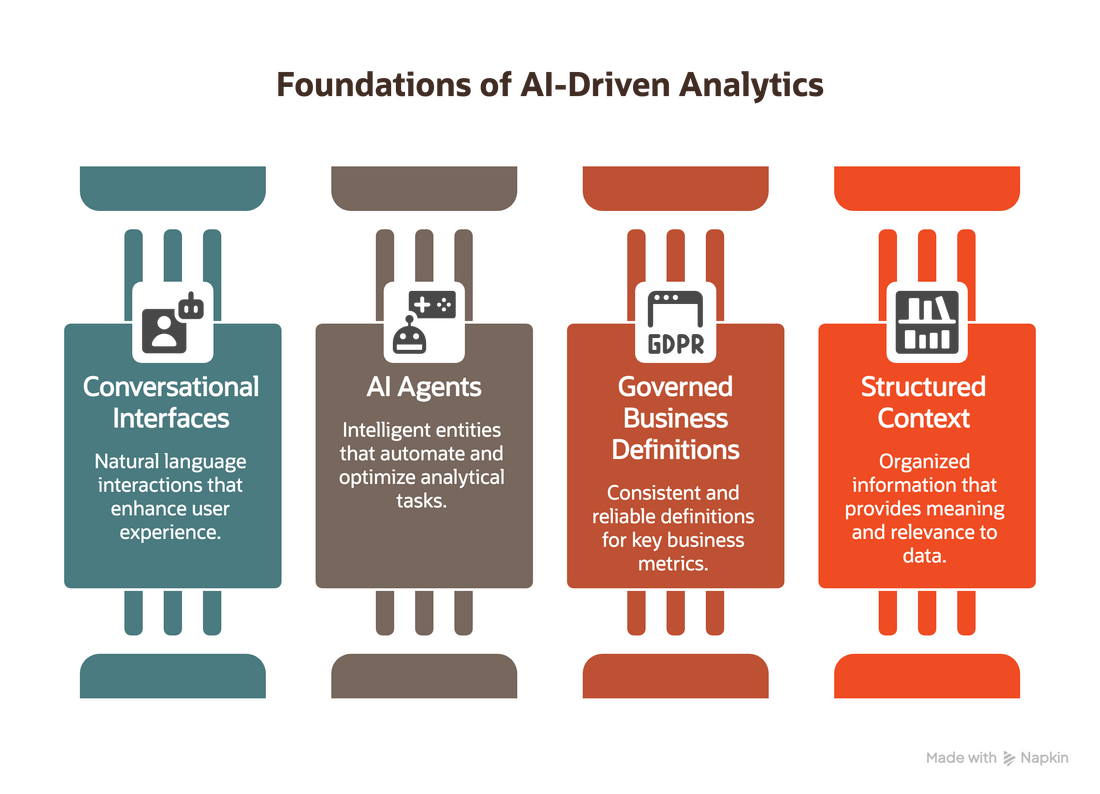
In a recent article, I explored why semantic models remain foundational in the age of AI-driven analytics. As conversational interfaces and AI agents become more common in analytics platforms, the need for governed business definitions and structured context underneath becomes even more important.
Natural language interfaces make analytics easier to use, but they also increase the importance of definitions for metrics, hierarchies and relationships that are consistent. Without that structure, even simple questions such as "Which definition of revenue should the AI use?" can lead to inconsistent answers.
While semantic models help provide this grounding within analytics tools, the challenge becomes more complex when we consider the broader enterprise data landscape.
The Fragmented Nature of Enterprise Data
Most organisations operate across a wide range of systems and data environments. These may include:
- ERP systems
- CRM platforms
- operational databases
- SaaS applications
- data warehouses
- data lakes
- unstructured documents and knowledge sources
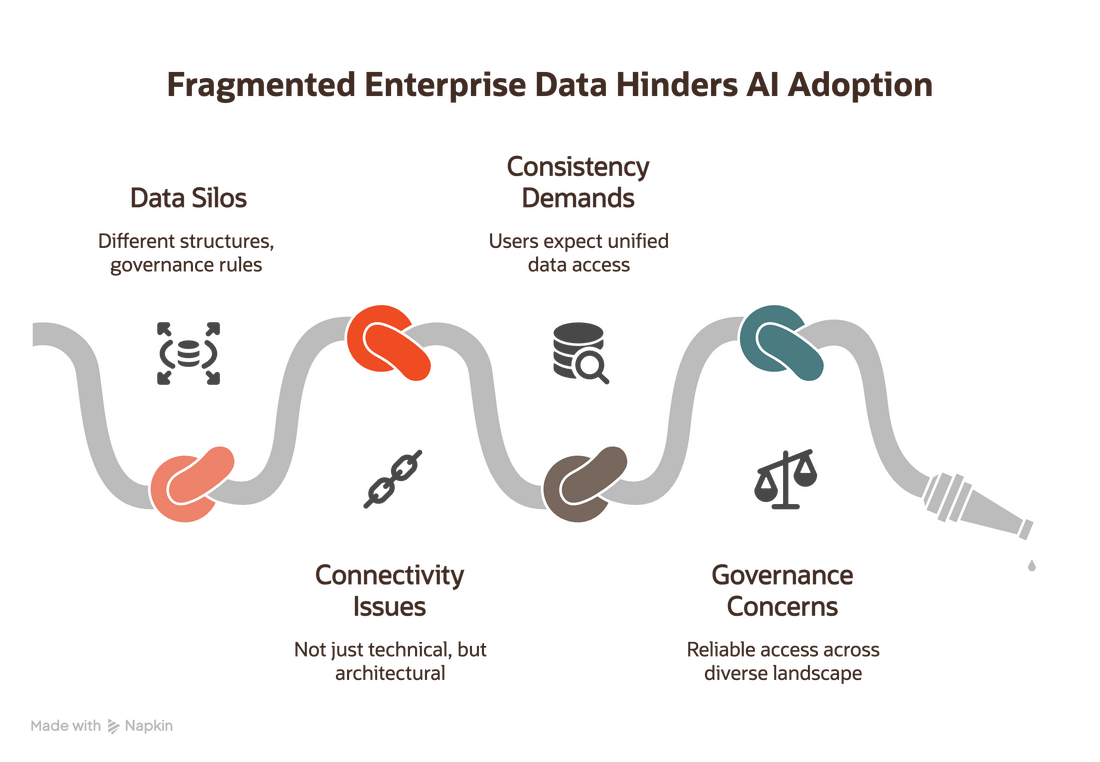
Each of these environments may have its own data structures, governance rules and access patterns. Connecting analytics and AI workloads across these systems is therefore not simply a technical problem of connectivity, but an architectural challenge of consistency and governance.
As organisations begin to adopt AI-driven analytics and AI agents, expectations change. Users increasingly expect systems to answer questions using data from across the enterprise ecosystem, often in near real time.
This raises an important question: how can organisations provide reliable and governed access to data across such a diverse landscape?
Oracle AI Data Platform as the Architectural Bridge
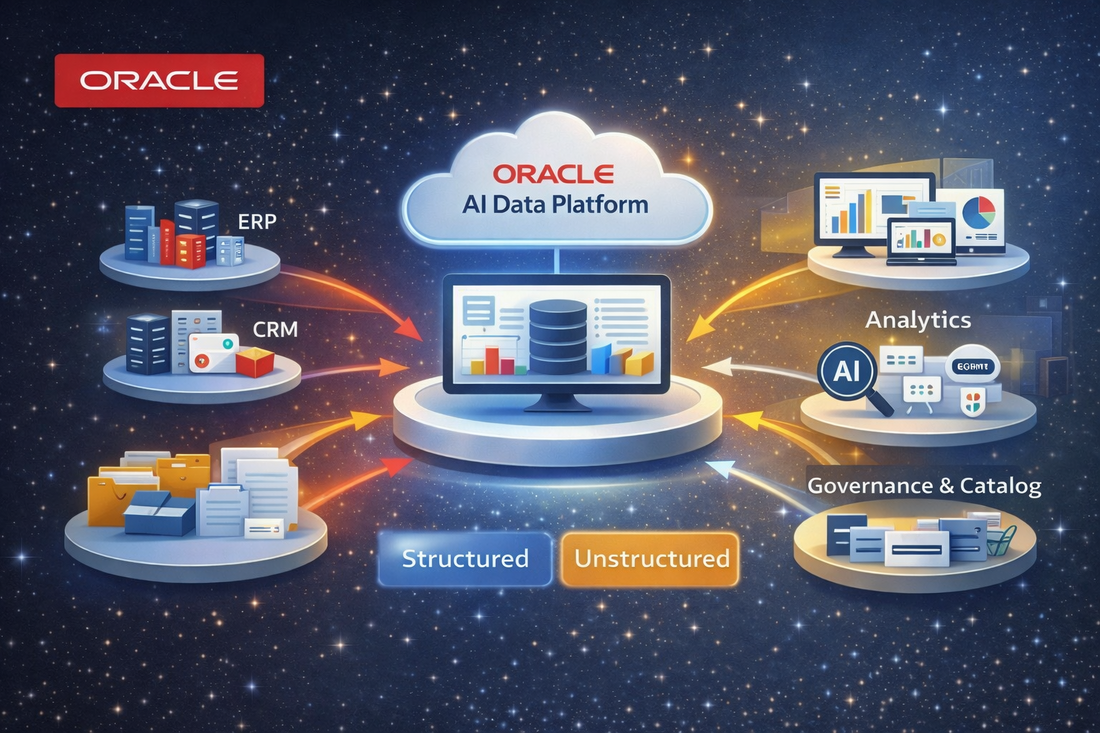
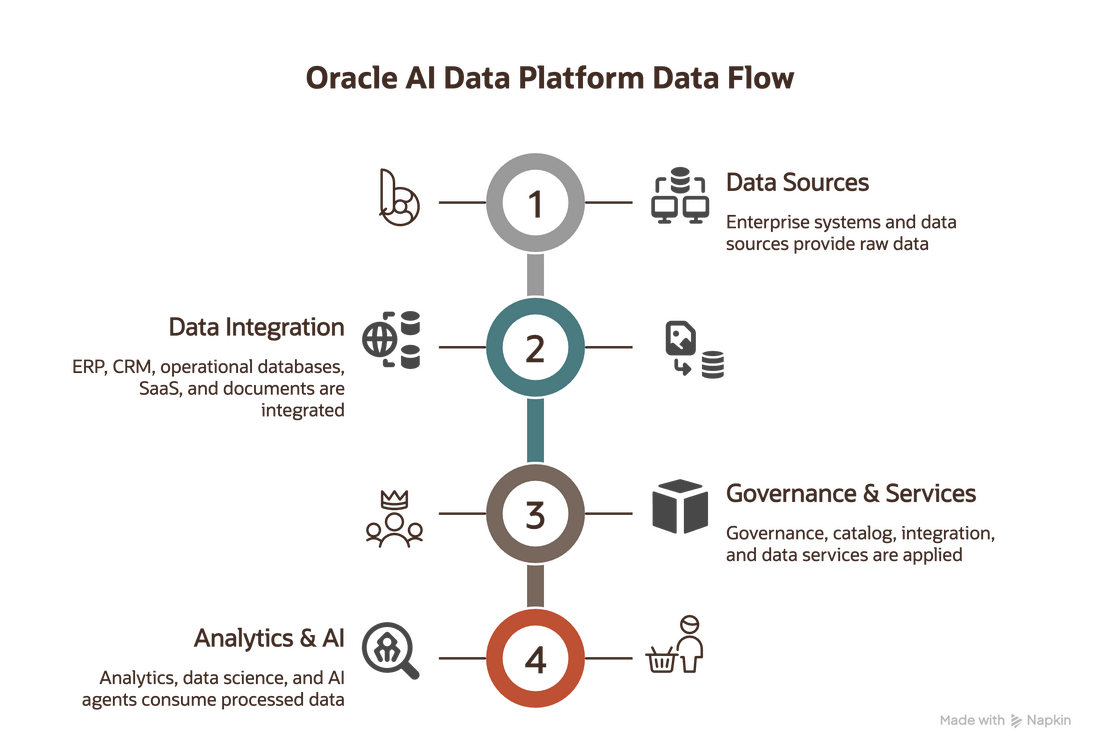
This is where Oracle AI Data Platform (AIDP) plays a pivotal role. Rather than being just another collection of services, AIDP can be viewed as a platform layer that helps bridge disparate enterprise data ecosystems. It provides a unified environment that supports data integration, governance, discovery and access across both structured and unstructured data sources.
Conceptually, the architecture begins to look something like this:
Governance and the Role of the Data Catalog
An important component of this architecture is governance. As data from different systems is brought together, organisations need mechanisms to ensure that the data being used by analytics tools and AI workloads remains trusted and discoverable.
Catalog capabilities play a key role here. They allow organisations to:
- manage metadata
- track lineage
- support discovery of data assets
- maintain governance across the platform
This helps create a "single pane of glass" through which enterprise data assets can be understood and accessed across the organisation.
Extending the Architecture with Business Semantics
However, governance and cataloging alone do not fully address the challenge of consistent business meaning.
Today, semantic models typically exist within analytics platforms such as Oracle Analytics Cloud. These models define business metrics, hierarchies and relationships that allow users to interpret structured datasets consistently.
In a previous blog post I discussed how these semantic models help ground AI-driven analytics and AI agents by providing clear definitions for business concepts. As AI workloads expand across the broader data platform, there is an opportunity to extend this concept further.
Recently I proposed an idea in the Oracle Analytics Idea Lab suggesting the introduction of a business semantic layer within the AIDP catalog that would complement the semantic models already available in Oracle Analytics Cloud.
The goal would not be to replace existing semantic models, but to make governed business definitions more broadly accessible across the data ecosystem. Such a layer could provide shared definitions for key metrics such as revenue, margin or customer value that could be consumed by analytics tools, AI agents, data science workloads and other applications.
Importantly, this approach could also extend semantic context beyond purely structured datasets, helping connect structured enterprise data with unstructured knowledge sources.
Supporting the Next Generation of AI Analytics
As organisations move towards AI-driven analytics, the importance of strong data architecture becomes even clearer.
AI agents and conversational analytics change how users interact with data, but they do not remove the need for governance, cataloging and semantic structure. If anything, these architectural components become even more critical in ensuring that AI-generated insights remain consistent and trustworthy.
Platforms such as Oracle AI Data Platform help provide the foundation for this architecture by bridging disparate enterprise data ecosystems and providing a unified environment for governance, integration and access.
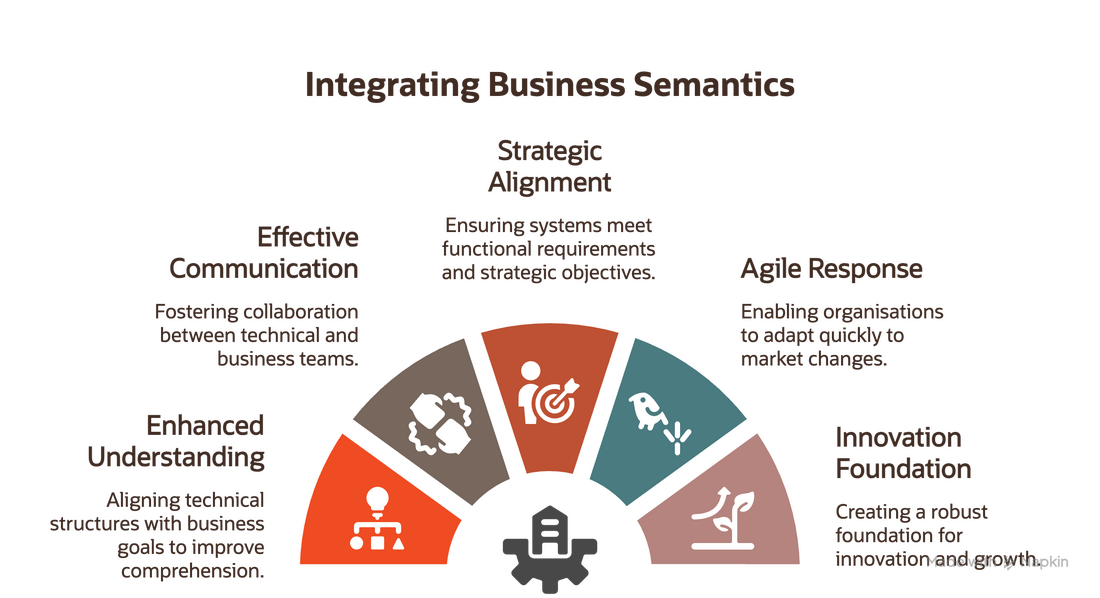
Combined with well-designed semantic models and governed catalogs, this creates a powerful foundation for reliable AI-powered analytics.
Conclusion
Enterprise data environments are by nature fragmented, but AI-driven analytics increasingly expects a unified view of that data.
Oracle AI Data Platform provides an architectural bridge that helps organisations consolidate access to data across their ecosystems while maintaining governance and control. By combining integration, cataloging and analytics capabilities within a single platform layer, AIDP creates the potential for a true "single pane of glass" across enterprise data assets.
As AI analytics continues to evolve, extending semantic context across the broader data platform could become an important next step in ensuring that AI-generated insights remain grounded in consistent business meaning.